Red letter design
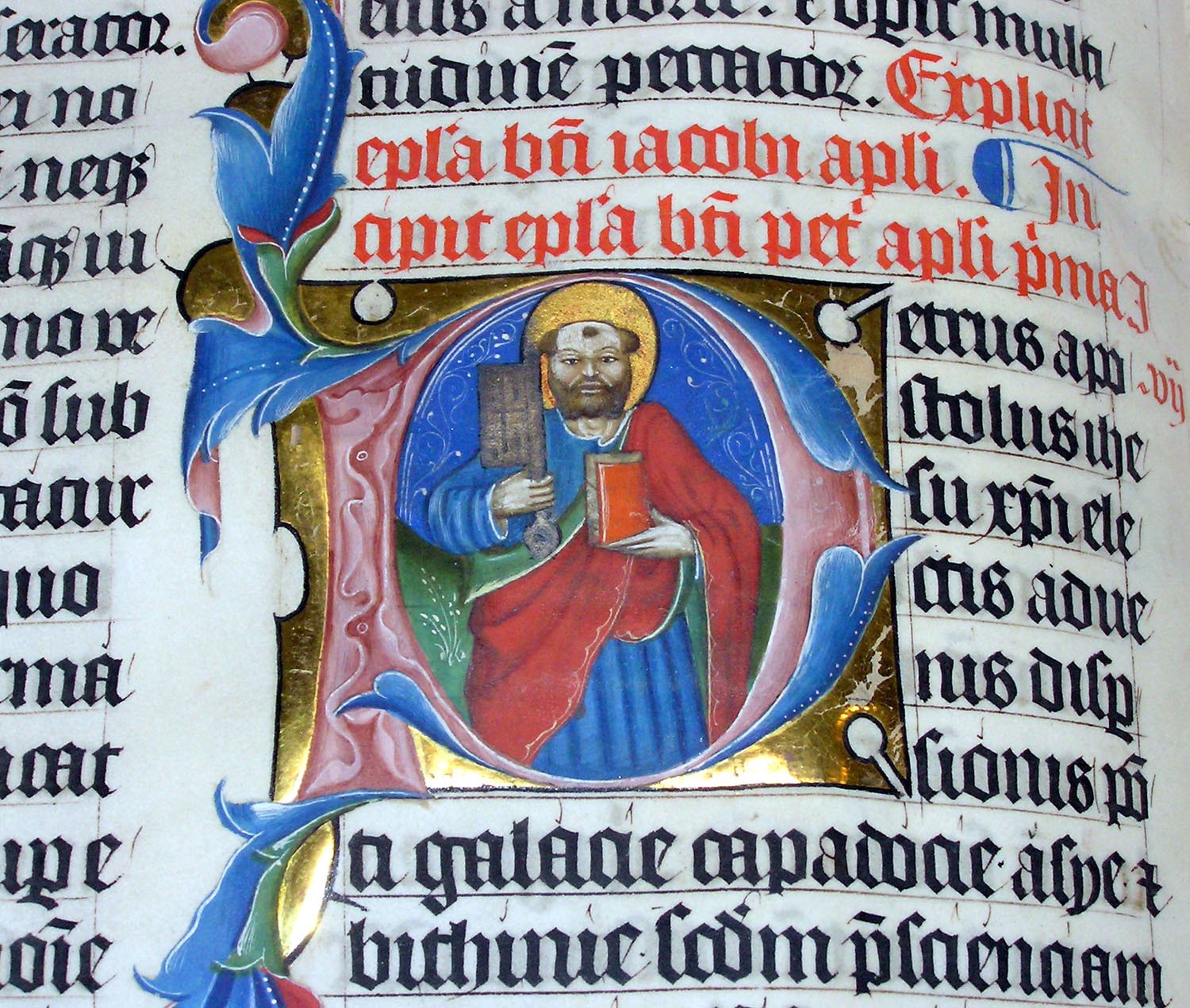
If you’ve ever come across a Bible, there’s a very good chance you’ve also seen a very common design pattern within it – the red letters of Jesus.
And yes, it may surprise you that even our modern Bibles today rely on critical design systems such as: Localization (original languages were Greek, Hebrew, Aramaic), Punctuation, Glossaries, Page numbers, Chapter and verse numbers, Book intros, Section divisions and headers, Footnotes, References, Commentaries, Maps, and Flourishes.
The original Scriptures had very few, if any of these patterns. Yet in most cases, they can be extremely helpful for the modern reader.
Coming back to the red letters of Jesus, it reminded me of a design system principle we use at work – color has meaning.
Rubrication for readability
Older literary patterns for highlighting important text was called “Rubrication”. Colored text, typically red, was used to distinguish it from the other surrounding black text. Essentially, it’s that same design principle used today – color has meaning.

The “Red Letter” edition of the Bible in 1901 was borne out of a desire to give clarity to Jesus ‘ words versus when something was being explained. It was especially helpful for King James versions which had no quotation marks. The creator of the idea received encouragement from a theologian who said, “It could do no harm and it most certainly could do much good”.
However…
The hubris of hewn stones
All design system choices have an impact.
The modern color text only solved the problem for Jesus, but everyone else’s dialog still suffers. The design choice was too narrow. The universal literary pattern of quotation marks would have resolved the root problem for all speakers. But like most design solutions implemented too early – it’s hard to get rid of it even if a better pattern exists…
Sadly, in some of today’s modern Christian circles, the red letters hold more weight because they feel more trustworthy than the rest of Scripture. I’ve seen many an author give more weight to the words of Jesus than Paul or Peter’s epistles, and so on due to this effect.
But why is this a problem though?
In 1 Timothy 3:16-17 it says, “All Scripture is breathed out by God and profitable for teaching, for reproof, for correction, and for training in righteousness, that the man of God may be complete, equipped for every good work.” In other words, it’s ALL the Word of God. To elevate one portion over another falsely states that some of God’s Word is less important than other parts.
In fact, every additional design system choice added on top of Scripture has some sort of impact – section headings, chapter numbers, verse numbers, and especially commentaries alongside the words – artificially providing incorrect context, breaks in a series of logic, or just plain personal preference. And the same holds true with every design choice in our churches as well – art, music, and methods of worship.
This is probably why we’ve also been given the verse in Exodus 20:15 “If you make me an altar of stone, you shall not build it of hewn stones, for if you wield your tool on it you profane it.” God knows our tendencies to audit, help, and create can accidentally (or worse, intentionally) draw people away from Himself. The Lord cares about being worshiped both well and rightly – often making our best-intended additions quickly become ill-advised subtractions.
So when approaching design choices, especially around God’s Word and worship, one should always prayerfully consider them well. They are most certainly never in a place of “It certainly could do no harm…”.